Restoring Wichita is in its founding year. These are our goals, our model, and the outcomes we commit to tracking and reporting — for every person we serve, whatever brought them to our door. Clearly, on schedule, to every funder and donor who invests in this mission.
Grant partners: Full logic model, budget breakdown, outcome metrics, and funder summary available on our dedicated funder page.
Funder Resource Page →How inputs become outcomes — the clear, traceable path from donor investment to sustained recovery and community reintegration.
Donor funding, peer coaches, MOU partners, board expertise, faith community, tracking infrastructure
Peer coaching, basic needs distribution, housing navigation, mental health warm handoffs, employment workshops, 30/60/90 follow-ups
Clients enrolled, coaching sessions delivered, referrals made, meals distributed, placements confirmed, follow-ups completed
Reduced isolation, basic needs stable, housing confirmed, MH provider connected, active recovery plan, wellbeing score improvement
Adults across southwest Oklahoma — in addiction, hunger, housing crisis, navigating the gap between military service and civilian stability, or any form of lostness — with the peer support, stability, and community they need to be restored and rebuilt
Restoring Wichita tracks outcomes at enrollment, 30, 60, and 90 days using three simple tools in Google Sheets. We report what we delivered — not what we hoped.
Percentage of clients with documented stability — sobriety where applicable, housing confirmed, basic needs met — at 90-day follow-up. Tracked via standardized check-in tool and peer coach confirmation.
Percentage of clients who received housing navigation support and remained stably housed at 90-day follow-up. Confirmed by peer coach check-in.
All mental health referrals followed up within 14 days to confirm the connection was made. If not confirmed, the referral is re-attempted immediately.
Average improvement on our 5-point wellbeing self-rating scale between intake and 90-day follow-up. Baseline established at enrollment for every client.
Percentage of clients who are employed, in a training program, or enrolled in education at 90-day follow-up. Tracked as a community reintegration indicator.
Target cost per client for full 90-day whole-person support — peer coaching, basic needs, housing navigation, mental health linkage, and follow-up. Every service. One person. One pathway home.
Captures baseline at enrollment: housing, employment, sobriety, food security, MH status, wellbeing self-rating (1–5). Assigns unique Client ID. Completed for every new client.
Logs every client interaction: date, Client ID, service type, duration, notes. Produces all output metrics. Completed within 24 hours of every interaction.
5-question standardized check-in: housing stable? Sober? MH connected? Peer network? Employed/in school? Wellbeing re-rating for comparison to baseline.
All tools maintained in Google Sheets. No specialized software required. Data available to funders on request. Full outcomes framework available on the funder resource page.
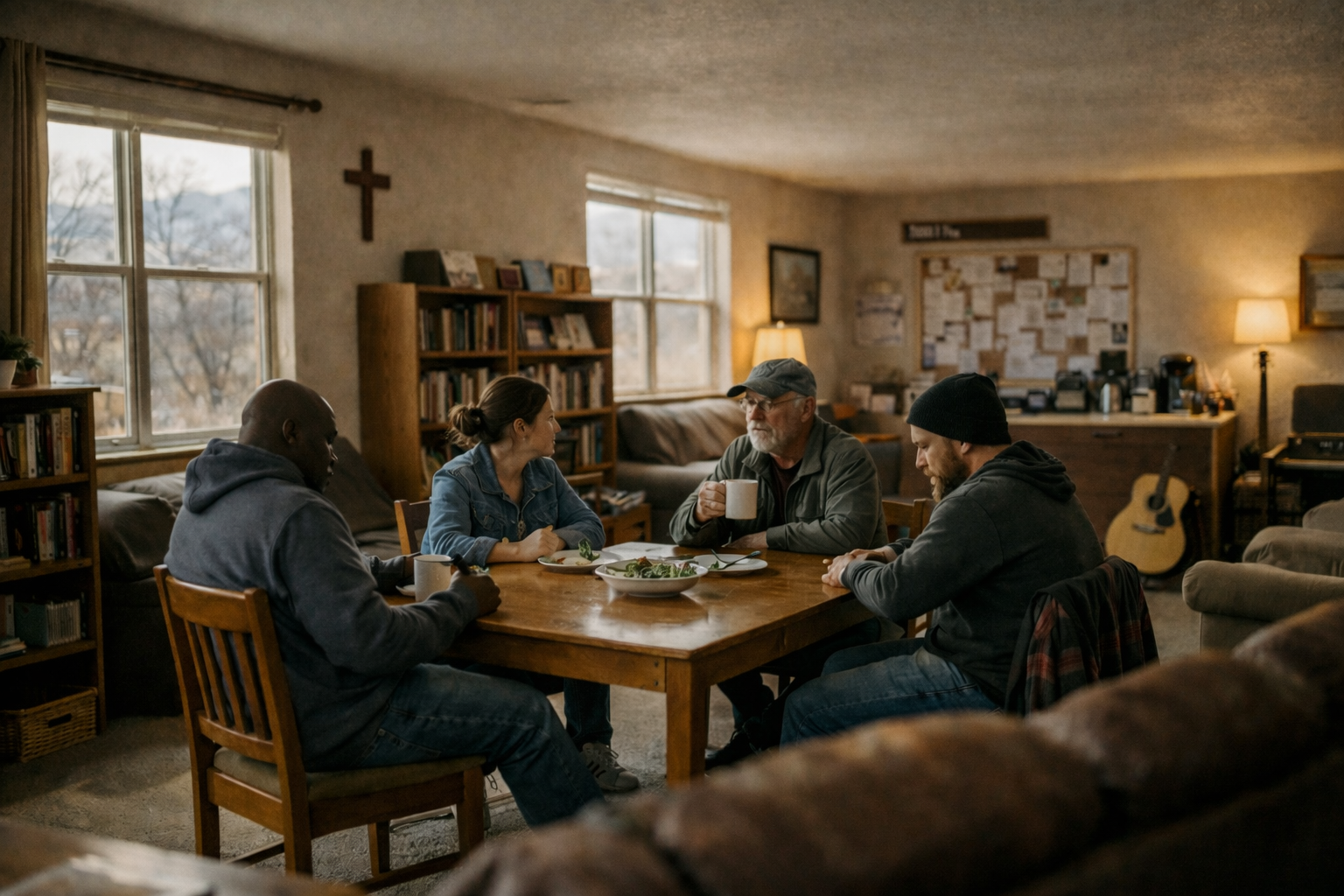
RHSH is launching services in 2026. We don't have three years of outcome data — and we won't claim what we haven't earned. What we have is a board of credentialed people who have spent careers in this space, evaluated this model, and committed their names and expertise to it. That is its own form of evidence.
"Peer support is not a supplement to recovery. For most people, it is the recovery. The clinical system provides treatment. The peer coach provides the reason to use it — and the relationship that makes the difference between 30 days sober and sustained recovery. Restoring Wichita builds that relationship first."
"Housing is the most under-resourced piece of the recovery puzzle in southwest Oklahoma. A client who loses their housing after treatment is statistically likely to relapse within 30 days. Restoring Wichita addresses that directly — with MOU partners, warm referrals, and 90-day follow-up that most recovery organizations don't have the infrastructure to provide."
"From a governance and financial controls standpoint, Restoring Wichita is built to the standard that foundation funders expect — not the standard typical of a launch-year nonprofit. The financial oversight structure, conflict of interest policies, and restricted fund tracking were built in from the start, not added after a funder asked for them. That discipline is rare and it matters."
"In our tradition, healing has never been a clinical event. It is a community event. You heal together or you do not heal at all. Restoring Wichita is the first organization I have worked with that understands that — not as a cultural talking point, but as the actual structure of every service they deliver."
Every dollar Restoring Wichita receives goes directly to program delivery. Below is exactly what each giving level makes possible — defined, accountable, and reported back.
Food assistance and hygiene supplies for one client during their first week of recovery engagement — the immediate stability that makes everything else possible.
Four peer coaching sessions with a Certified Peer Recovery Coach — the consistent relationship that statistically predicts sustained recovery.
Complete 90-day wraparound — peer coaching, basic needs, housing navigation if needed, MH linkage, and 30/60/90-day follow-up with outcome tracking.
Full five-service program delivery for one quarter — every service line active, every client fully supported, quarterly funder report delivered.
Full-time Certified Peer Recovery Coach salary for six months — the core of everything Restoring Wichita delivers. The relationship that makes sustained recovery possible.
Complete Year 1 program delivery — all five services, staffing, coordination, and quarterly impact reporting. 40+ clients served. Outcomes documented and reported.
Every giving level above represents someone who gets a peer coach instead of a voicemail, a housing referral instead of a waitlist, a mental health provider who actually calls back. The numbers are real because the people are real.
Restoring Wichita is in its founding year. We do not have three years of outcome data. We have a clear model, a committed board with deep credentials, a peer coach with two years of lived recovery, and an origin story built from the inside of the gap we are filling.
What we commit to: measuring what matters, reporting what we find, and never claiming impact we have not earned. Funders who invest in Restoring Wichita's founding year are not buying a track record — they are building one with us. We will honor that with transparency at every stage.
This is what Restoring Wichita is actually measuring. Not compliance. Not program completion. A new heart. The outcomes framework tracks housing stability, sobriety, food security, mental health linkage, and employment — because those are the conditions under which a heart of stone becomes a heart of flesh. The numbers are real. The reporting is rigorous. But underneath every data point is a person who was lost and is being found — and a God who promised to do the work that no program can do on its own.